
Covers
Measure the grill before you buy a cover
Three numbers decide whether a cover sits right or flaps loose all winter. Here is where to put the tape and what to do with the readings.
Written on the bench, checked 2026-10-17
Measure the grill, not the old cover
An old cover has spent a few seasons stretching in the sun and shrinking in the cold, so its seams no longer describe anything. Hang it on the fence and go at the grill itself with a tape measure.
Take three readings with the lid closed. Width goes across the front, from the outer edge of one side shelf to the outer edge of the other. Depth goes front to back, from the tip of the handle to the furthest point of the lid or the rear vent. Height goes from the ground to the top of the closed hood, and the ground is the floor, not the bottom of the cart.
Decide what the side shelves are doing
Most gas grills add somewhere between ten and twenty inches of width once the shelves are out. Whether that width counts depends on how you park the grill, so make the call before you measure rather than after.
If the shelves stay up because that is where the tongs and the salt live, measure over them and buy for the wide number. If you drop them every time you close the lid, measure the cabinet alone. Buying wide and folding the shelves down leaves a bag of fabric that catches wind; buying narrow with the shelves up means the cover never reaches the bottom of the legs.
Read the size the way a cover is cut
Cover sizes are cut ranges, not exact matches. A cover listed at 55 inches wide is built to swallow a grill somewhere in the low fifties and still hang below the control panel.
Aim for two or three inches of room past your widest reading. Less than that and the corners of the shelves press into the seams every time you pull it on, which is where fabric splits first. Much more than that and wind gets underneath.
- Width past the shelves, lid closed, shelves in their parked position.
- Depth from the front handle to the back of the lid.
- Height from the concrete to the top of the hood.
- Add two or three inches to the width before you shop.
Where the fabric actually gives out
Covers rarely fail across the middle. They fail at the corners of the side shelves, along the top seam where water pools, and at the hem where a loose cover slaps against the cart in the wind.
That is why the fit matters more than the fabric weight. A snug cover with straps cinched under the cart takes almost no abuse. A loose one works itself into the same three spots all season, and by spring the seam has opened.
What we cut
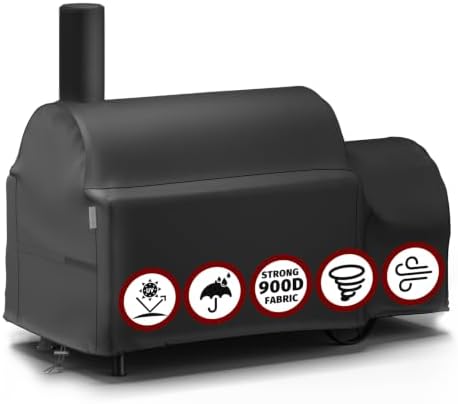
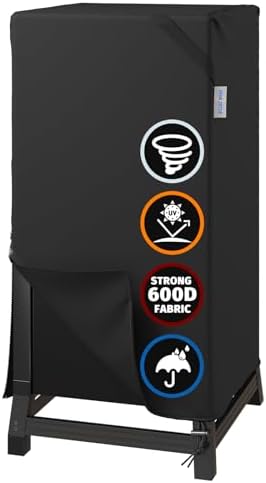
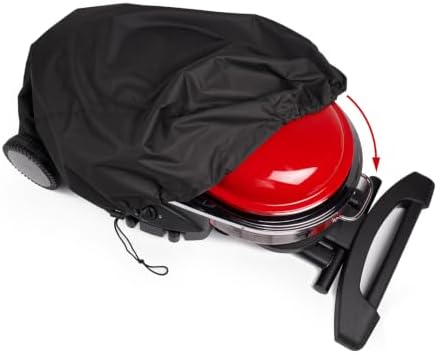
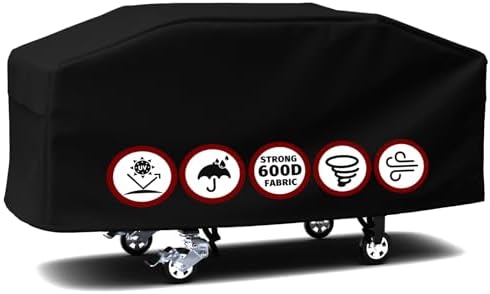
Our covers run from small portable grills up past the wide cart models, and the listed dimensions on every one of them are the grill it is built to clear, not the flat panel size. Check the number against your three readings and you are done.
From our bench
What we make for this
Everything below comes off the same shelf the note is about.
Prices come off the live listings, so they go stale without warning.
Read next
- Propane
QCC1, Type 1, and what screws onto what
Propane fittings have two ends and they answer to different names. Sorting the tank end from the appliance end takes about a minute and saves a return trip. - Propane
The flame went low. Regulator or hose?
A grill that suddenly burns at candle height is usually not broken. Work through the free checks before you buy anything. - Inside the cookbox
Flavorizer bars and heat plates: when to swap them
Every gas grill has angled metal between the burners and the food. It goes by half a dozen names and it is meant to be replaced.