
Inside the cookbox
The igniter clicks but nothing lights
Clicking tells you almost nothing on its own. What matters is whether a spark is jumping, and where.
Written on the bench, checked 2026-10-17
First, prove the gas is fine
Light the grill with a long match or a stick lighter through the side port. If it lights and runs normally, the fuel path is fine and you have an ignition problem, which is a cheap and self-contained repair.
If it will not light by match either, stop working on the igniter. The problem is upstream, and the low flame checks are the place to go instead.
Find out whether a spark is actually jumping
Do this after dark or with the garage door down, gas off. Push the button and watch the electrode tip next to the burner. You are looking for a visible blue snap crossing from the tip to the metal beside it.
A click with no visible spark is the common case, and it usually means the charge is leaking somewhere it should not. A spark that jumps in the wrong place, partway along the wire or at the base of the ceramic, points at the same thing.
The four things that go wrong
Work down this list in order, because the first two cost nothing.
- Dead battery, or corroded contacts inside the cap. Electronic modules take one small cell and give a weak, slow click as it fades.
- Wet or greasy electrode. A film across the ceramic carries the charge to ground instead of letting it jump. Dry it, then scrub the ceramic clean.
- Cracked ceramic insulator. A hairline crack grounds every spark and cannot be cleaned back to life. The electrode gets replaced.
- Gap gone wrong. The tip should sit about an eighth of an inch from the burner metal. Too far and nothing crosses, too close and the spark is too weak to catch gas.
Piezo and battery modules are different animals
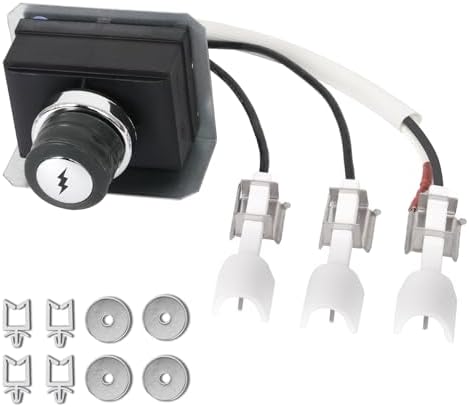
A piezo unit has no battery. You push, a spring loaded hammer strikes a crystal, and you get one sharp snap per push. When a piezo fails it usually goes quiet or feels mushy, and it gets replaced whole.
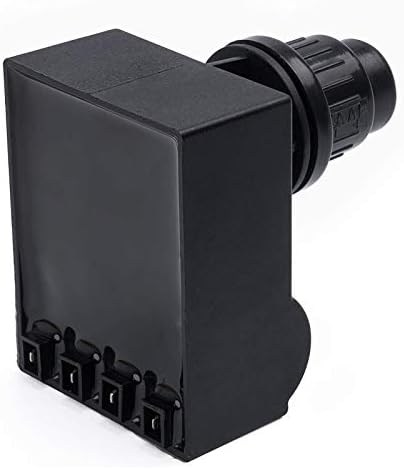
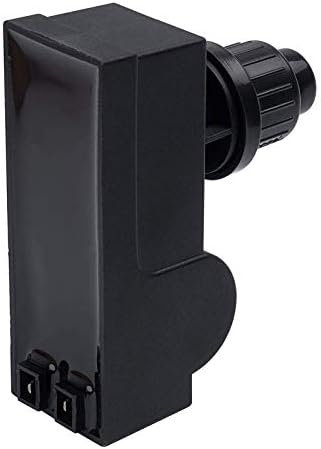
A battery module clicks in a fast run for as long as you hold the button, and it feeds one or more electrodes from separate outlets on the back. Count the outlets on the old one before ordering, because a module with two outlets does not cover a grill wired for four.
Spark but still no flame
If the spark looks strong and the burner still will not catch, the gas is not arriving at that exact spot. Check the burner ports nearest the electrode for grease or rust plugging them, and clear them with a wire or a straightened paper clip rather than a drill bit.
It is also worth checking that the electrode has not been bent away from the burner during a cleaning. It only takes a knock with a grill brush, and half an inch of drift is enough to break the circuit.
From our bench
What we make for this
Everything below comes off the same shelf the note is about.
Prices come off the live listings, so they go stale without warning.
Read next
- Covers
Measure the grill before you buy a cover
Three numbers decide whether a cover sits right or flaps loose all winter. Here is where to put the tape and what to do with the readings. - Propane
QCC1, Type 1, and what screws onto what
Propane fittings have two ends and they answer to different names. Sorting the tank end from the appliance end takes about a minute and saves a return trip. - Propane
The flame went low. Regulator or hose?
A grill that suddenly burns at candle height is usually not broken. Work through the free checks before you buy anything.