
Fire pits
Fire pit covers: round, square, and rectangular
A fire pit cover is sold by shape first and size second. Get the shape wrong and no amount of pulling on the hem will fix it.
Written on the bench, checked 2026-10-17
Start with the silhouette, not the tape
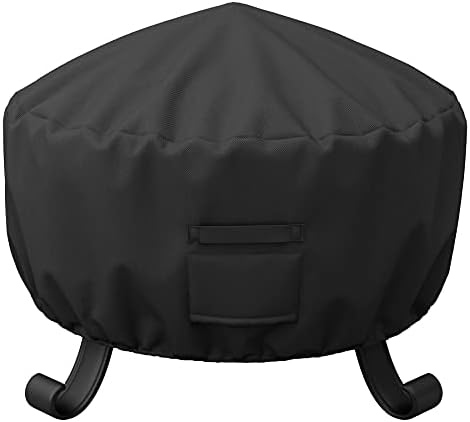
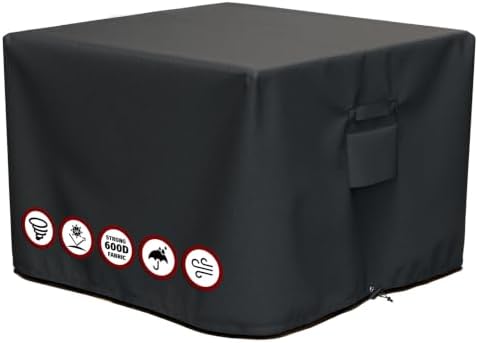
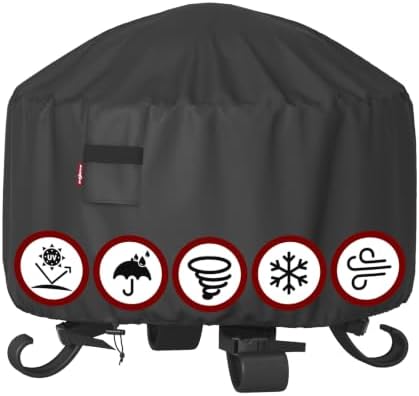
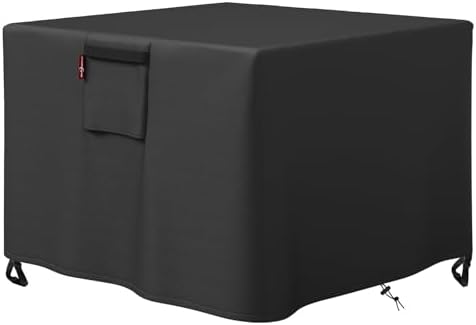
Fire pits come in three outlines and each one takes a differently cut cover. A round bowl needs a round cover, which is a flat disc with a skirt. A square table needs four corners sewn in. A rectangular table needs four corners and two different side lengths.
A round cover pulled over a square table gapes at the corners and holds water in the middle. A square cover on a round bowl bunches into folds that the wind gets under. Neither is a size problem, so neither is fixable by going up an inch.
Measure the pit, then read the range
For a round bowl, measure straight across the widest point, usually the outer lip rather than the fire opening. For a square or rectangular table, measure the tabletop edge to edge in both directions. Then measure from the tabletop down to where you want the cover to end.
Our fire pit covers are listed with a range, like fits 32 to 36 inch. That range describes the pit, and the cover itself is built to the top of it. A cover listed for 32 to 36 inch is cut at 36. Every fire pit cover on our shelf with both numbers published works this way, so if your pit measures 33 inches you are buying the 36 and the extra inches become slack rather than strain.
Height is the number people skip
Width decides whether the cover goes on. Height decides whether it stays on. A cover that stops above the burner housing leaves the part you most wanted covered out in the weather, and one cut far too long puddles on the patio.
The pattern across our range is that table covers run roughly two feet deep because they are meant to reach past the cabinet, while covers for open bowls are shallower, in the range of sixteen to twenty inches, because there is less below the rim to hide. Measure your own drop rather than assuming, especially if the pit stands on a base or a hearth.
Lids, tabletops, and the pit that is also furniture
Many gas fire tables spend most of the year as a table, with a lid over the burner and a surround people set drinks on. That surround is part of the width. Measure the outer edge of the whole table, not the burner opening in the middle of it, or you will order to the wrong number by a wide margin.
If you keep a lid or a glass wind guard in place under the cover, add that to the height as well.
Bowls with a name
Stainless steel fire bowls are a category of their own because their sides taper and their rims flare. We list covers cut for the Solo Stove Bonfire shape rather than asking you to force a generic round cover over a flared lip.
For anything else, the outer diameter and the drop are still the two numbers that matter.
What we build them from
Most of our fire pit covers are cut from 600D fabric, which is a weave weight rather than a brand. It is heavy enough to hold a shape through a windy season and to shed rain without sagging into a bowl.
Look for the things that keep a cover on the pit rather than in the neighbor yard: a drawstring or buckle at the hem, and vents so wind passes through instead of lifting the whole cover like a sail.
From our bench
What we make for this
Everything below comes off the same shelf the note is about.
Prices come off the live listings, so they go stale without warning.
Read next
- Covers
Measure the grill before you buy a cover
Three numbers decide whether a cover sits right or flaps loose all winter. Here is where to put the tape and what to do with the readings. - Propane
QCC1, Type 1, and what screws onto what
Propane fittings have two ends and they answer to different names. Sorting the tank end from the appliance end takes about a minute and saves a return trip. - Propane
The flame went low. Regulator or hose?
A grill that suddenly burns at candle height is usually not broken. Work through the free checks before you buy anything.