
Decks and patios
What an under grill mat actually stops
A mat under the cooker is housekeeping, not armor. Knowing which of the two it is tells you what size to buy and where to put it.
Written on the bench, checked 2026-10-17
The three things it catches
Grease is the first and the reason most people go looking. Spatter throws further than you think, a drip tray that fills up will find the edge, and a bratwurst that rolls off the grate lands somewhere. On bare wood or porous stone all of that soaks in and stays.
Ash and sparks are the second. An open bowl throws specks well past its own footprint, and each one that lands on a board leaves a dark pinprick you cannot scrub out.
Wear is the third and the least dramatic. Cart wheels rut softwood decking, steel feet leave rust rings after a wet week, and dragging a loaded cabinet across composite boards scuffs them.
What it does not do
A mat is a layer between your cooker and your floor. It is not a substitute for the clearances your grill or pit manual asks for, it does not change how far the cooker should sit from a wall or a railing, and it is not a reason to move a fire anywhere it would not otherwise belong.
We would rather say that plainly than let a mat do work it was never cut for. Treat it as the thing that keeps your deck looking like a deck.
Size it to the mess, not to the grill
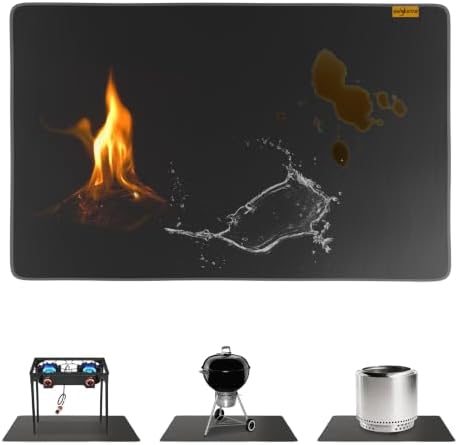
The common mistake is buying a mat the size of the cooker footprint. Drips land in front of the grill where you stand, and a cart rolls, so the mat has to cover where the machine goes as well as where it sits.
Our rectangular mats run from a compact size for a kettle or a tabletop unit up to a hundred inches long for a griddle station with gear either side. Fifty two inches deep is the width most of them share, which is enough to take a standard cart plus a stride of working room in front of it.
- Measure the cooker at its widest, including side shelves folded out, because that is when you use them.
- Add the space where you stand and where the lid swings, then add the run if the cart rolls to a resting spot.
- If the cart parks against a railing, remember the wheels have to end up on the mat and not half off the edge.
Round mats and fire bowls
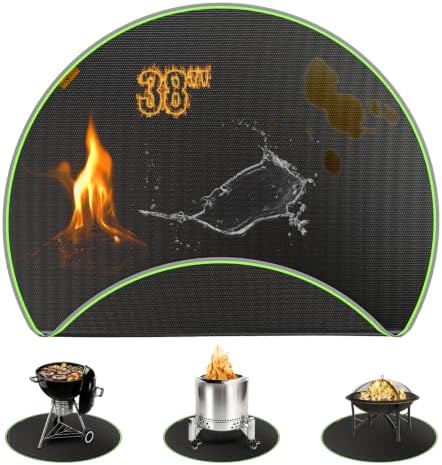
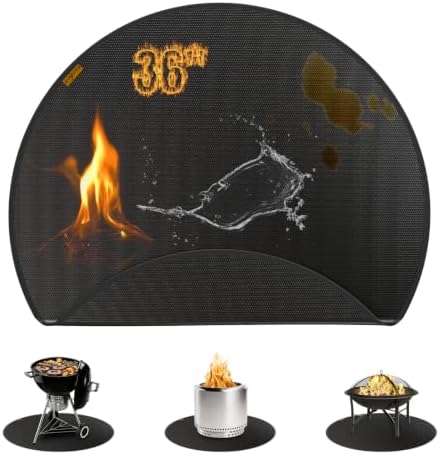
Bowls need a circle rather than a rectangle, because the mess arrives evenly in every direction and a rectangle wastes fabric on two sides while running short on the others.
Ours come thirty six and thirty eight inches across, sized to leave a margin of bare mat all the way around a backyard bowl rather than just matching its base. The margin is the point: it is where the sparks land.
How they are built
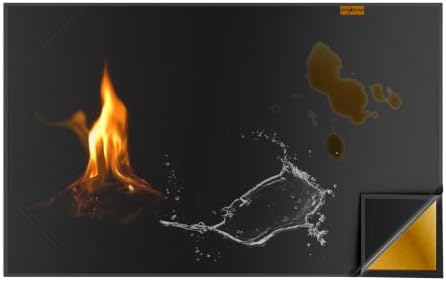
The mats on our shelf are a woven fiberglass core with a silicone coating on both faces. The coating is what makes grease sit on the surface to be wiped instead of wicking into the weave, and it is why a mat can be hosed rather than laundered.
The details worth checking are at the edges and the underside: stitching that locks the hem so it does not fray along a fold line, reinforced corners where the mat gets dragged, and a backing with enough grip that the mat does not travel when a cart rolls onto it.
Keeping one alive
Roll it rather than folding it to the same crease every time. A coated fabric gives up along a repeated fold long before the rest of it wears out.
Lift it after heavy rain instead of leaving it flat on the boards. A waterproof mat sheds water off the top and will happily hold a damp layer underneath, and trapped moisture against decking is worse for the wood than the grease you were worried about.
From our bench
What we make for this
Everything below comes off the same shelf the note is about.
Prices come off the live listings, so they go stale without warning.
Read next
- Covers
Measure the grill before you buy a cover
Three numbers decide whether a cover sits right or flaps loose all winter. Here is where to put the tape and what to do with the readings. - Propane
QCC1, Type 1, and what screws onto what
Propane fittings have two ends and they answer to different names. Sorting the tank end from the appliance end takes about a minute and saves a return trip. - Propane
The flame went low. Regulator or hose?
A grill that suddenly burns at candle height is usually not broken. Work through the free checks before you buy anything.